Education is a powerful enabler of gender equality and social progress. In Montenegro, laws and
strategic documents recognize the right to education under equal conditions. Over the years, this
commitment has translated into growing participation of girls and women at all levels of the
education system. However, persistent inequalities, gender stereotypes, and occupational
segregation continue to shape educational outcomes and limit the potential of education to serve
as a transformative force.
According to national statistics, girls make up nearly half of all pupils in pre-primary, primary,
and secondary schools. Notably, women form a majority in higher education, and
contain 58.7% of university students. This upward trend continues across postgraduate levels,
where women complete 61.8% of bachelor’s degrees, 70.2% of master’s degrees, and 60% of
doctoral degrees.
Children enrolled in pre-primary institutions 2023 and 2020
Pupils enrolled in primary education at the beginning of the school year 2023/2024 and 2020/2021
Pupils enrolled in secondary schools by gender; the beginning of the school year 2020/2021 and 2023/2024
Proportion of students enrolled in higher education by gender, 2023/2024 academic year
Proportion of students enrolled in higher education by gender, 2023/2024 academic year
Proportion of students who completed bachelor and specialist studies by gender 2023
Proportion of students who completed bachelor and specialist studies by gender 2023
Despite this academic success, there is no consistent evidence that higher education
translates into better employment opportunities or higher income for women. Gender-based inequalities
in the labor market persist, indicating a disconnect between educational
attainment and economic empowerment.
Gender Disparities by Field of Study
At the same time, gender disparities in educational fields remain among major concerns. Men overwhelmingly dominate technical and industrial programs, such as mechanical and
electrical engineering, while women are overrepresented in caregiving and arts-related sectors. This reflects deeply embedded societal expectations and the influence of gender norms on career
choices.
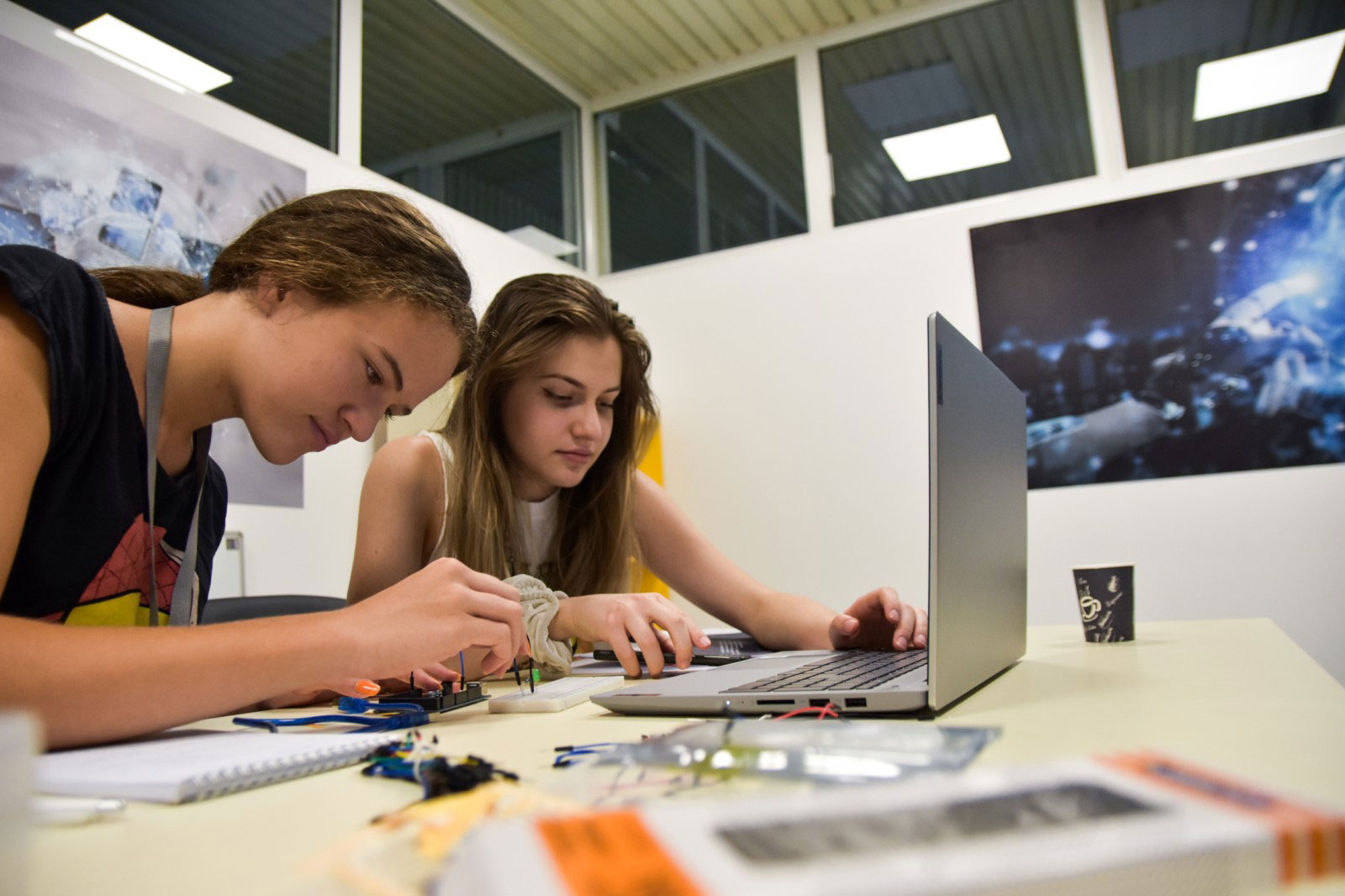
In terms of digital and ICT skills, men and women in Montenegro report similar levels of
proficiency in basic computer use. However, there is a notable gap when it comes to advanced
digital skills. For example, only
6% of women report knowledge of programming languages,
compared to 10.6% of men. This reinforces the broader underrepresentation of women in
TEM (Science, Technology, Engineering, and Mathematics) fields, despite growing global
demand for such skills.
The National Strategy for Gender Equality 2021–2025
calls for integrating gender
perspectives into education, culture, and media. Measures include introducing gender-responsive
curricula, ensuring the use of gender-sensitive language in textbooks, training educators, and
fostering inclusive classroom environments.
While the new
Strategy for the Development of Higher Education 2024–2027
acknowledges gender in its language and data presentation, it does not provide a comprehensive framework for
mainstreaming gender across the higher education sector.
Challenges remain in ensuring that school environments are safe and inclusive. There is
currently no standardized protocol for preventing and addressing gender-based violence
in schools, though protocols on general violence and mediation exist. A recent survey showed that
17% of pupils experienced
experienced some form of violence in school, and more than half believed
their teachers would not respond appropriately. These findings highlight the need for stronger
protection mechanisms and targeted interventions to create safe learning spaces for all children.
Gender disparities also exist in school leadership and academic careers. While 63% of school
principals are women, and women outnumber men in non-professorial academic roles, men
still dominate senior academic positions such as full professorships.
To build an equitable education system, Montenegro needs to go beyond participation statistics
and tackle the root causes of gender inequality in education. This includes:
- Conducting comprehensive assessments of curricula and textbooks to eliminate stereotypes.
- Strengthening teacher training on gender equality.
- Promoting inclusive policies for women in STEM fields.
- Establishing clear mechanisms for reporting and responding to school-related gender-based violence.
- Encouraging gender-aware policy planning across all levels of education.
Education holds the key to social justice and sustainable development. For it to fully deliver on
its promise, it must be equitable, inclusive, and gender-responsive—from early childhood
through to higher education and lifelong learning.