Security is not only about protecting borders, it is about protecting people, fostering trust, and
creating conditions for peace. When women are meaningfully included in peace and security efforts, societies are more resilient. But like many sectors, security and defence in Montenegro
remain shaped by historical gender imbalances and persistent stereotypes.
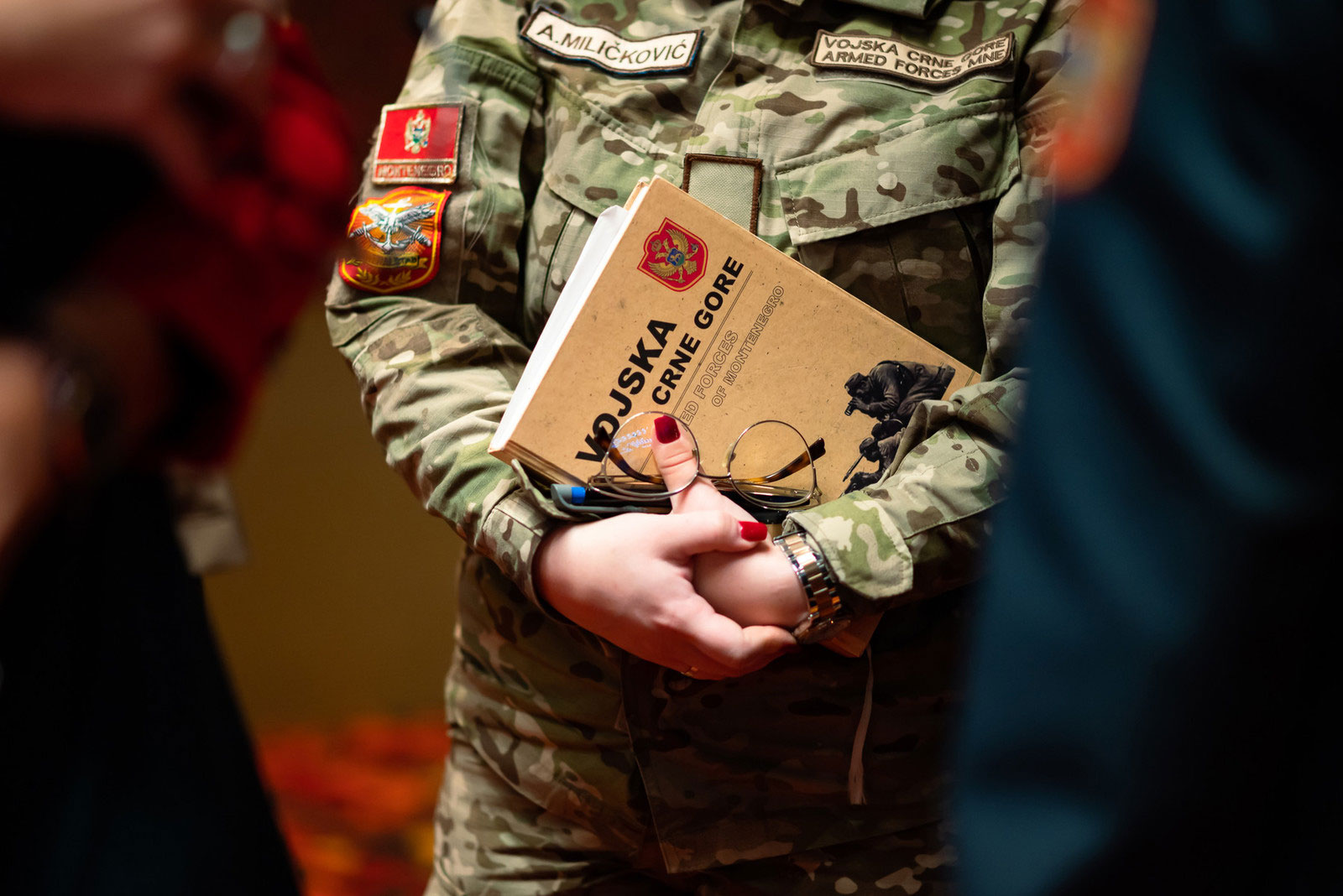
Women now make up over 56% of staff in the Ministry of Defence, and 15% of personnel in
the Armed Forces of Montenegro (AFM)—up from just 8.7% in 2013. However, most
women are employed in civilian or administrative roles:
Key Gender Statistics in Security and Defence – Montenegro
Among professional military personnel, women represent just over 12%, with the highest
concentration in lower officer ranks. Currently, no woman holds a rank higher than Major.
Meanwhile, women account for 47.1% of civilian staff but remain underrepresented in
leadership and combat roles. The National Security Agency, which has consistently had
the lowest representation of women since 2013, remains an outlier in progress.
This disparity reflects deeper structural and cultural challenges: unequal career advancement
opportunities and traditional role expectations. More than half of citizens believe that women are less capable than men for military service. These attitudes are especially prevalent among
men, with 58% sharing this belief.
From Resolution to Action: The Foundations of Gender-Responsive Security
The adoption of
UN Security Council Resolution 1325
in 2000 marked a turning point in global
efforts to recognize the vital role women play in peace and security. Its four pillars -
participation, prevention, protection, and recovery, serve as a blueprint for governments
worldwide. Montenegro adopted its first National Action Plan (NAP) to implement this
agenda in 2017, followed by a second plan covering 2019–2022.
The latest
Strategy for the Implementation of UNSCR 1325 (2024–2027)
marks a step forward. For the first time, Montenegro’s framework includes all four pillars,
including the often-overlooked “relief and recovery” component. This strategy involves multiple institutions, from
the Ministry of Defence and Police Directorate to the Supreme State Prosecutor’s Office and
civil society organizations.
However, institutional knowledge of UNSCR 1325 has to be improved. Only 20% of
employees in key ministries are aware of the resolution’s content, and just 7% say they are
actively contributing to its implementation. The primary barrier cited by staff is the lack of
awareness across institutions, followed by low engagement from leadership and a shortage of
trained personnel to oversee and support gender integration.
Looking Ahead: What Needs to Change?
For gender equality in the defence sector to move from strategy to reality, Montenegro must
invest in both institutional accountability and cultural transformation. The United Nations outlines seven pillars
to advance women’s roles in defence, offering a practical roadmap for progress:
- Conduct thorough assessments of barriers to women’s participation
- Enhance recruitment and retention strategies
- Build inclusive, supportive workplace cultures
- Combat sexual harassment and gender-based violence
- Offer targeted leadership training and career development
- Ensure transparency in promotions and performance evaluations
- Equip institutions with dedicated gender specialists
Moreover, Montenegro must strengthen training across ministries to ensure that all staff, not
just senior officials, understand the value of UNSCR 1325 and how to operationalize it in daily
practice. Qualitative indicators should be used to measure real change, not just the number of
activities delivered.
Why It Matters?
Gender equality in defence is necessary to build more effective, trusted, and legitimate security
system that serves all citizens equally. Comprehensive training programs and stronger
institutional accountability are essential to bridge the existing challenges. Without these efforts,
Montenegro risks missing the opportunity to fully benefit from the diverse contributions women
can make to national security, peacekeeping efforts, crisis response, and defence.